
Charles Carson-Dowdy Sentenced to Life in Federal Prison for Murder of Ex-Girlfriend Starmichael Tucker in Pensacola
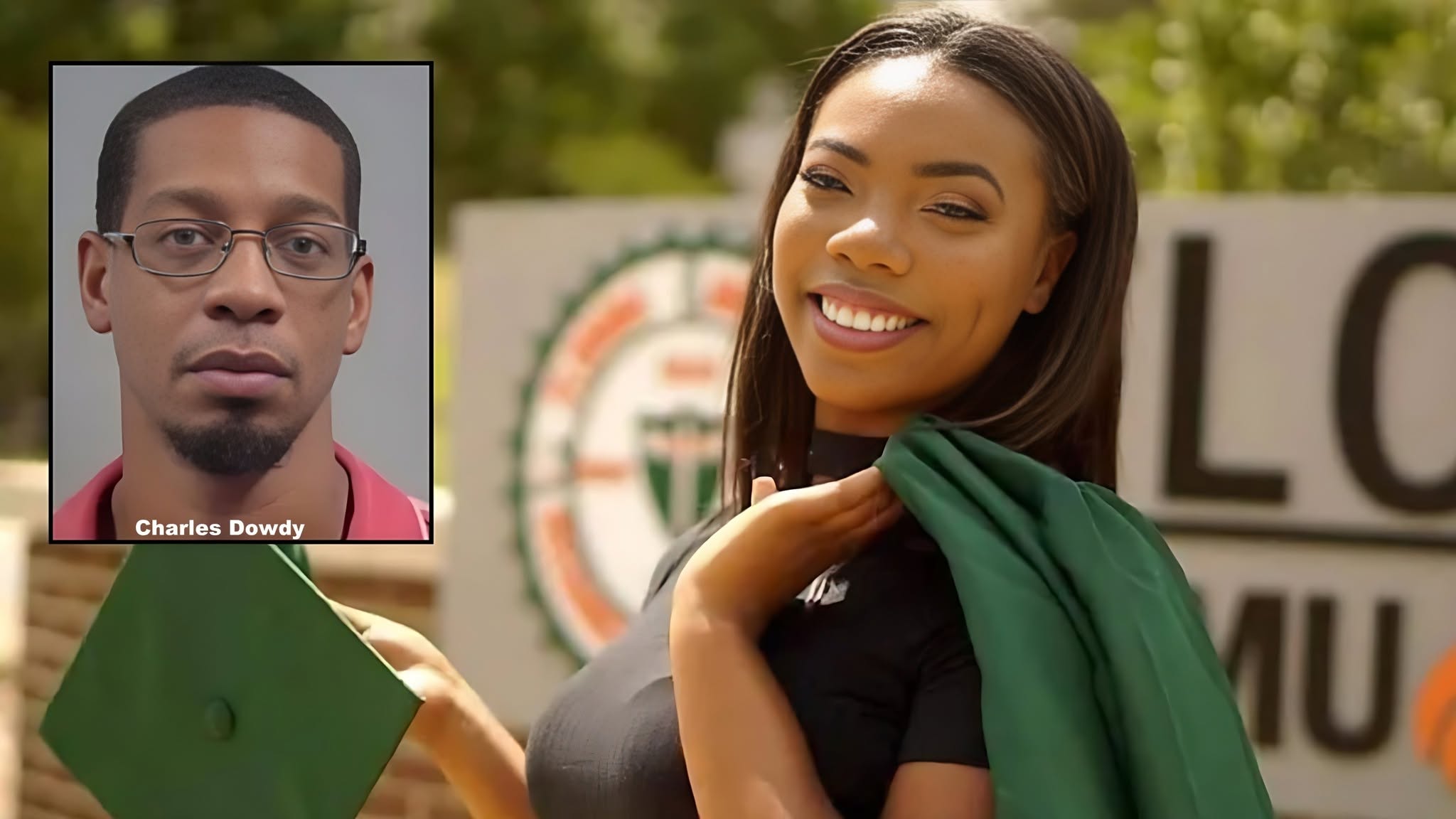
A federal judge on Wednesday sentenced 31-year-old Charles Carson-Dowdy of Mobile, Alabama, to life in federal prison for the brutal murder of his former girlfriend, Starmichael Tucker, whom he fatally shot in January 2025 after she ended their relationship. The sentence, handed down on August 26, 2026, brings a measure of closure to a case that shocked the Pensacola community and highlighted the deadly consequences of domestic violence and stalking. Tucker, whose life was cut short at a young age, was remembered by family and friends as a vibrant and promising young woman whose future was stolen by a man who refused to accept her decision to leave him.
The relationship between Carson-Dowdy and Tucker began in October 2024. According to court documents and testimony presented during the proceedings, Tucker traveled to California for the holidays later that year. While she was away, Carson-Dowdy admitted over text messages that he had been secretly reading her private messages throughout the course of their relationship. That revelation prompted Tucker to end the relationship, a decision that would ultimately cost her her life.
On January 1, 2025, as Tucker traveled back to Florida, Carson-Dowdy took an Uber from Mobile, Alabama, to her home in Pensacola with the intention of confronting her. He brought a Taurus handgun and an extra loaded magazine with him, despite being a convicted felon who was legally barred from possessing a firearm. He broke into her apartment, waited inside, and then texted her to inform her that he was there. When Tucker arrived home and discovered him inside her residence, people who spoke with her that day said she was extremely upset and named Carson-Dowdy as the reason for her distress. She had no way of knowing that the man she had once trusted was about to commit an act of unspeakable violence.
The following evening, on January 2, 2025, Tucker left her apartment around 8 p.m. Carson-Dowdy followed her out and fired approximately four shots into her back as she attempted to flee. Tucker collapsed in the parking lot of her apartment complex, wounded and defenseless. Carson-Dowdy then walked up to her and fired about ten more rounds at close range, ensuring that she would not survive. In a display of depravity that horrified investigators, he then got into her car, drove over her body, reversed and drove over it again, and then drove forward and ran over her body a third time before fleeing the scene in her vehicle.
Minutes after the murder, Carson-Dowdy sent a chilling text message to a family member of Tucker’s, stating simply: “Star is dead.” He also told another witness by phone that he had shot her “sixteen times.” Police later located Carson-Dowdy in Spanish Fort, Alabama, still driving Tucker’s car, with the murder weapon inside the vehicle. He was taken into custody without further incident, and the investigation into Tucker’s death began in earnest.
Carson-Dowdy was charged with multiple federal offenses, including cyberstalking, interstate domestic violence, murder through use of a firearm, and felon in possession of a firearm. During the legal proceedings, he pleaded guilty to the charges, admitting in court that he “deliberately and intentionally took the victim’s life with premeditated intent.” The guilty plea spared Tucker’s family the pain of a lengthy trial, though the emotional toll of the loss and the details of the crime have remained with them.
During the sentencing hearing on Wednesday, prosecutors presented evidence of the premeditated nature of the crime, including the fact that Carson-Dowdy had traveled from Alabama to Florida with a firearm and an extra magazine, had broken into Tucker’s apartment, and had waited for her to return before carrying out the attack. They also highlighted his text message to Tucker’s family member and his phone call to a witness as evidence of his intention and his lack of remorse. The defense did not dispute the facts of the case, and the judge imposed the maximum sentence allowed under federal law.
Tucker’s family and friends have expressed relief at the sentence, though they continue to grieve the loss of a woman they described as loving, ambitious, and full of life. In victim impact statements submitted to the court, they spoke of the void her death has left in their lives and of the ongoing pain caused by her violent death. They have also called for greater awareness of the dangers of domestic violence and stalking, noting that Tucker’s case is tragically representative of the patterns that too often precede intimate partner homicides.
The case also drew attention to the issue of firearm possession by convicted felons. Carson-Dowdy was prohibited from owning or possessing firearms due to his prior criminal record, yet he was able to obtain a Taurus handgun and an extra loaded magazine, which he used to carry out the murder. The case has prompted renewed calls for stricter enforcement of existing gun laws and for improved mechanisms to prevent felons from accessing firearms.
The Pensacola community, where Tucker lived and where the murder occurred, has been deeply affected by the case. Tucker was known to her neighbors and to those in her social circle as a kind and hardworking young woman who had her whole life ahead of her. Her death has served as a stark reminder of the prevalence of domestic violence and the importance of supporting victims who are attempting to leave abusive or controlling relationships.
The federal prosecution of Carson-Dowdy was notable for the range of charges brought against him, which included interstate domestic violence—a charge that reflects the fact that he crossed state lines to commit the murder. Federal authorities have emphasized their commitment to prosecuting domestic violence cases that involve interstate travel, particularly when they result in death. The life sentence imposed on Carson-Dowdy ensures that he will never again pose a threat to the public.
As Tucker’s family and friends continue to mourn her loss, they have expressed their gratitude to the investigators, prosecutors, and law enforcement officers who worked to bring Carson-Dowdy to justice. They have also expressed their hope that her story will inspire others to recognize the warning signs of domestic violence and to seek help before it is too late. Tucker’s memory will live on through the love of her family and friends, and through the efforts of those who work to prevent future tragedies like the one that took her life. Condolences are extended to all who are mourning her passing, and the community remains united in its determination to remember Starmichael Tucker not as a victim, but as a woman whose life mattered and whose legacy will continue to inspire change.
See an error? Review our Corrections Policy or contact the newsroom.